Blog
Calculation guides, methodology notes, and worked examples. Page 1 of 3.
-
Timber & Framing
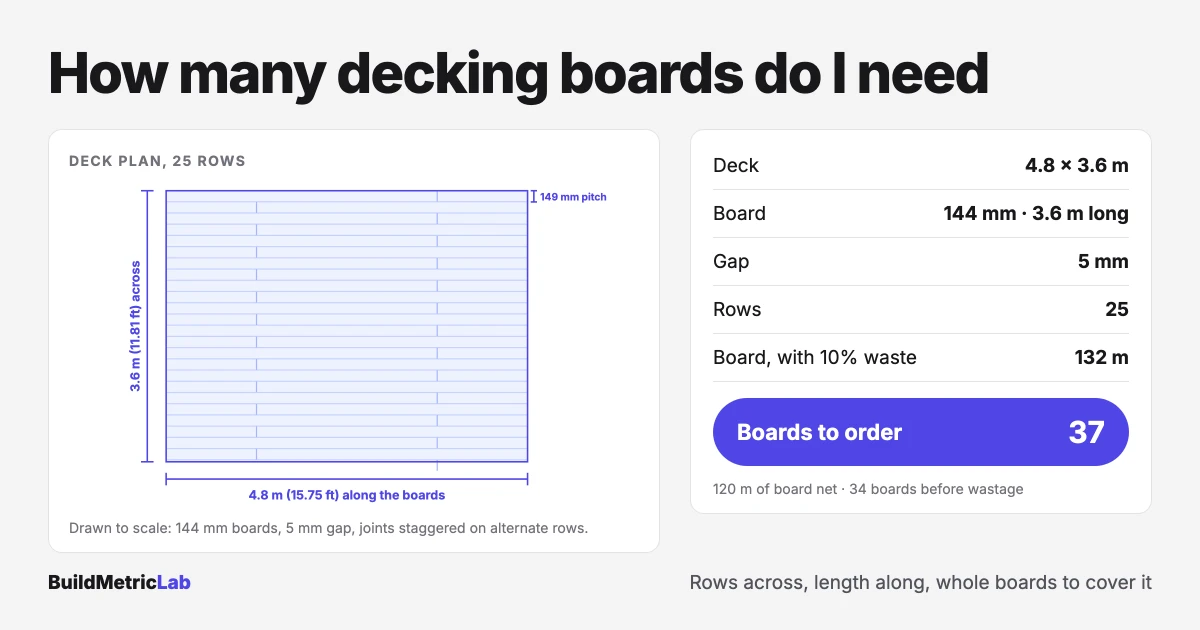
How Many Decking Boards Do I Need
Rows across the deck, running length along it, whole boards to cover that length. The formula, a worked example carried through in metric with imperial equivalents, the gap and wastage allowances that shift the count, and the board sizes that the same question travels under in the UK, North America and Australia.
Read guide → -
Timber & Framing
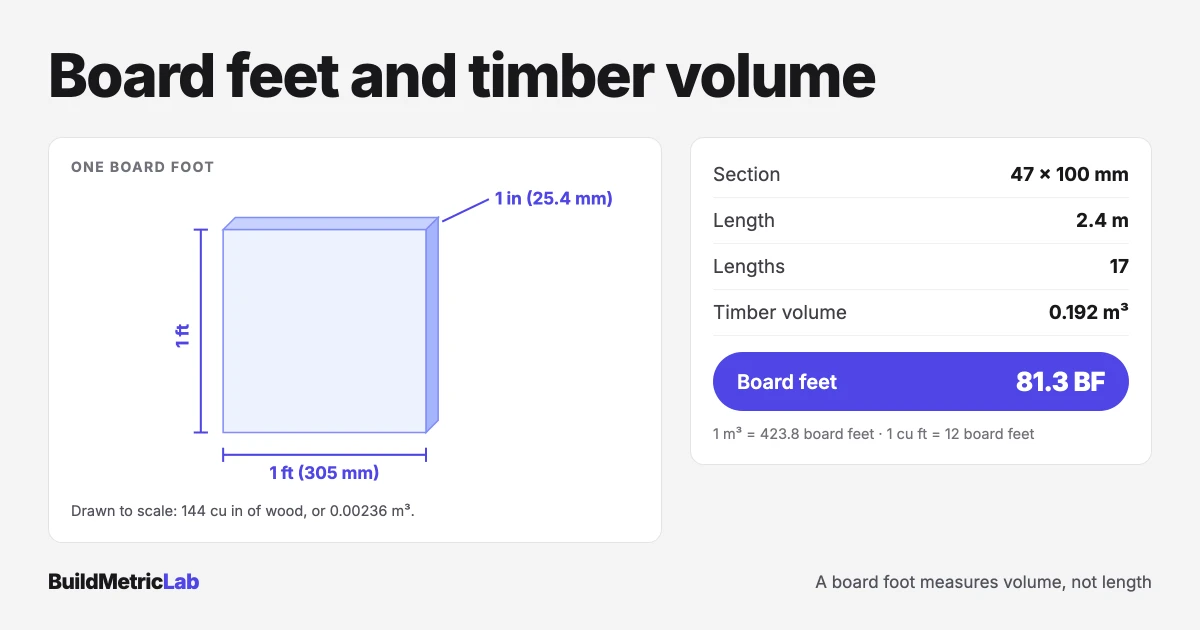
Board Feet and Timber Volume Explained
A board foot is a unit of volume, not of length, and a cubic metre holds 423.8 of them. The formulas both ways, a worked example in metric with imperial equivalents, and the nominal-versus-finished distinction that inflates most timber tallies by about half.
Read guide → -
Roofing
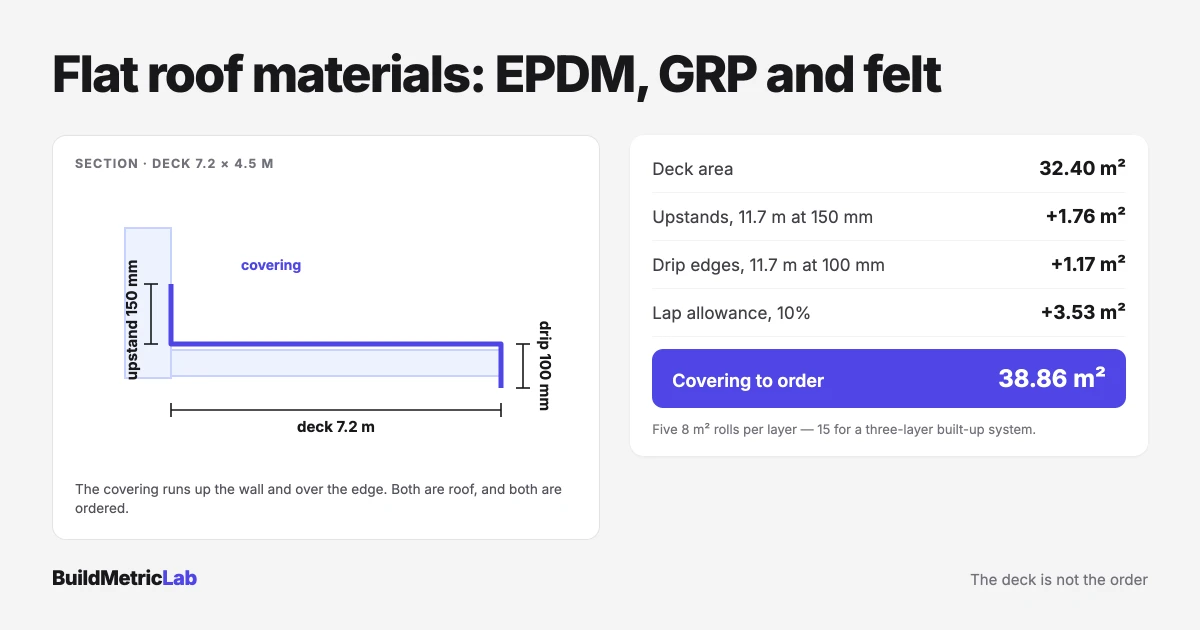
Flat Roof Materials: EPDM, GRP and Felt Coverage
Flat roof materials are ordered against the covering, not the deck. The formula, a worked example on a 32.4 m² extension roof, and where upstands and laps add a fifth to the order.
Read guide → -
Roofing
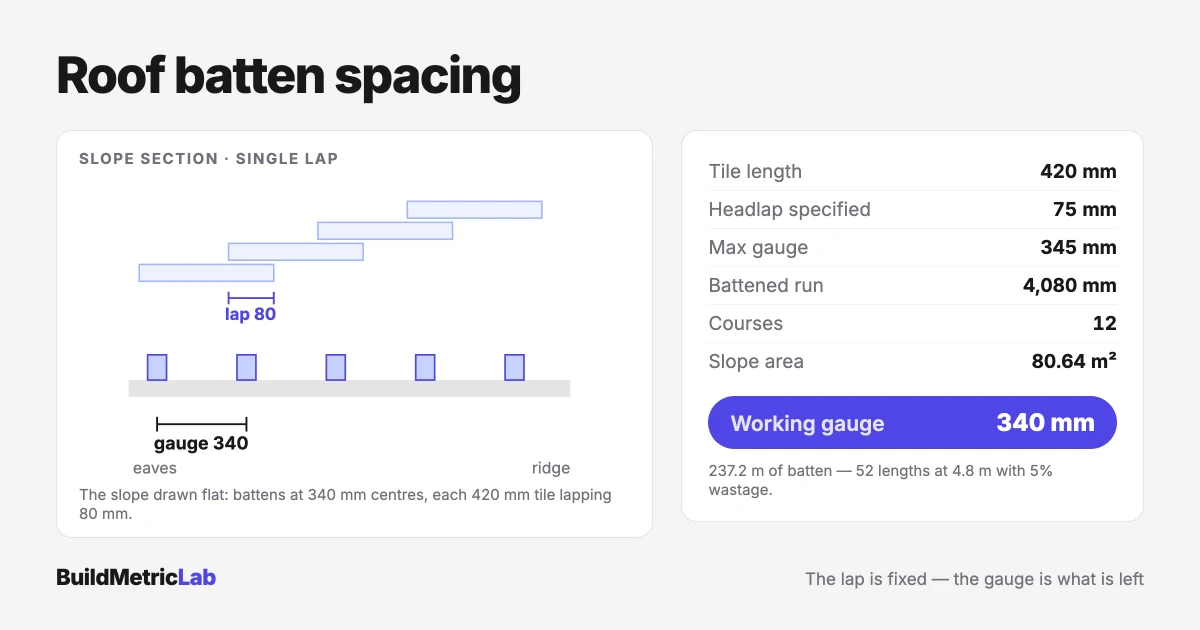
Roof Batten Spacing and Quantities by Tile Type
Roof batten spacing is derived from covering length and headlap, not chosen. This guide sets out the single lap and double lap formulas, a full worked example in metric with imperial equivalents, and the quantity method behind the calculator.
Read guide → -
Roofing
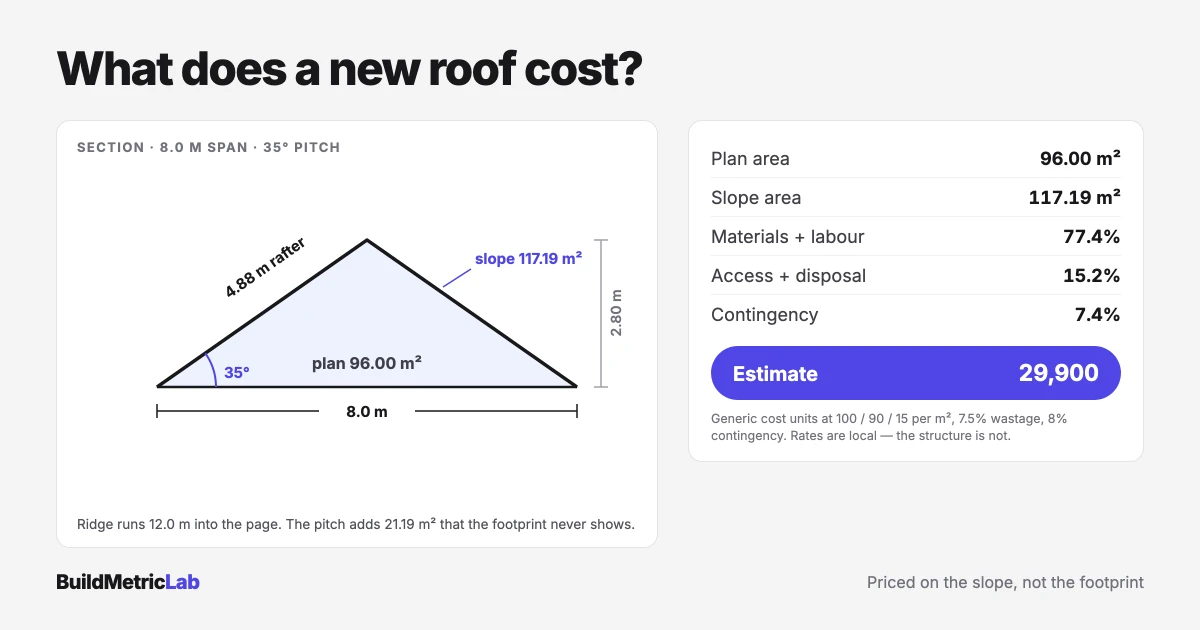
What Does a New Roof Cost? A Breakdown Framework
A new roof cost splits into five predictable lines: covering materials, labour, access, disposal and contingency. This post shows the geometry behind each one and works a full example in metric, with imperial equivalents throughout.
Read guide → -
Roofing
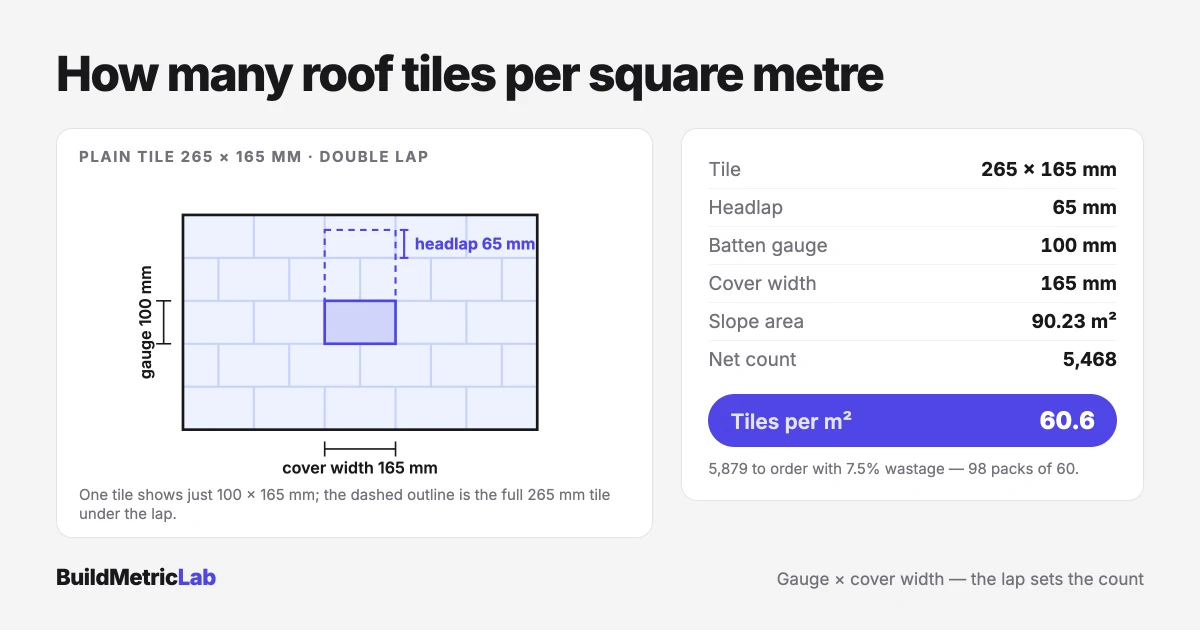
How Many Roof Tiles Per Square Metre
Roof tile counts come from batten gauge and cover width, not from tile size. This post sets out the formula, a full worked example on a 90.23 m² slope, and the wastage allowance to apply before ordering.
Read guide → -
Roofing
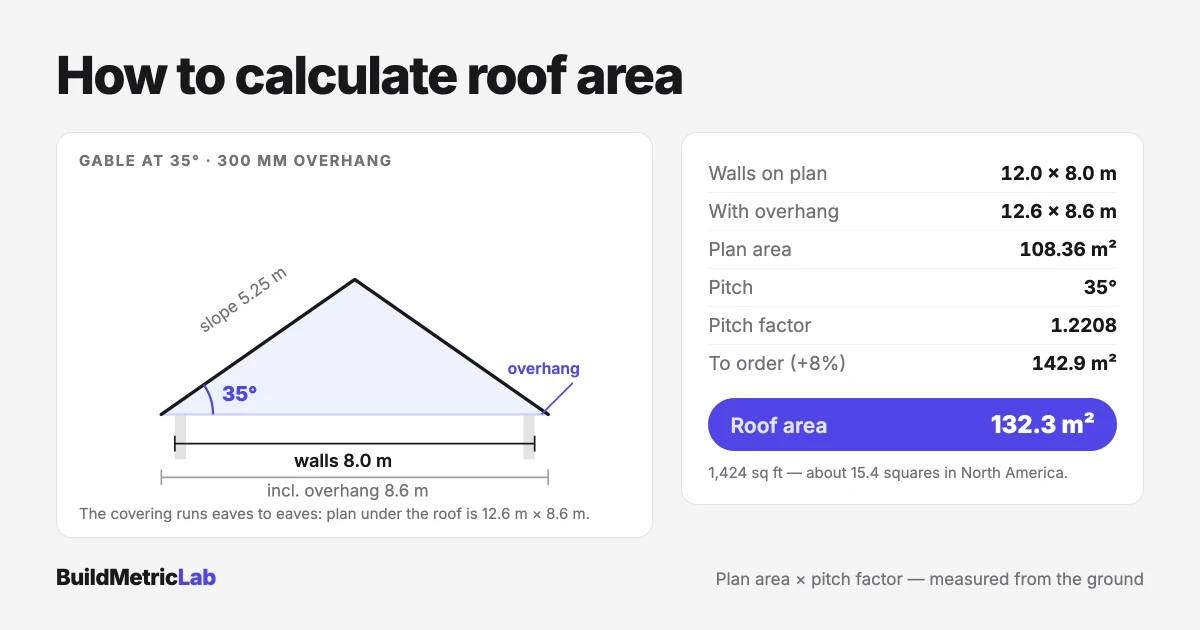
How to Calculate Roof Area Without Climbing Up
Roof area is always larger than the footprint underneath it. This guide covers the pitch factor formula, a worked example in metric with imperial equivalents, the three pitch notations used around the world, and how the number converts to square metres, square feet or roofing squares.
Read guide → -
Roofing
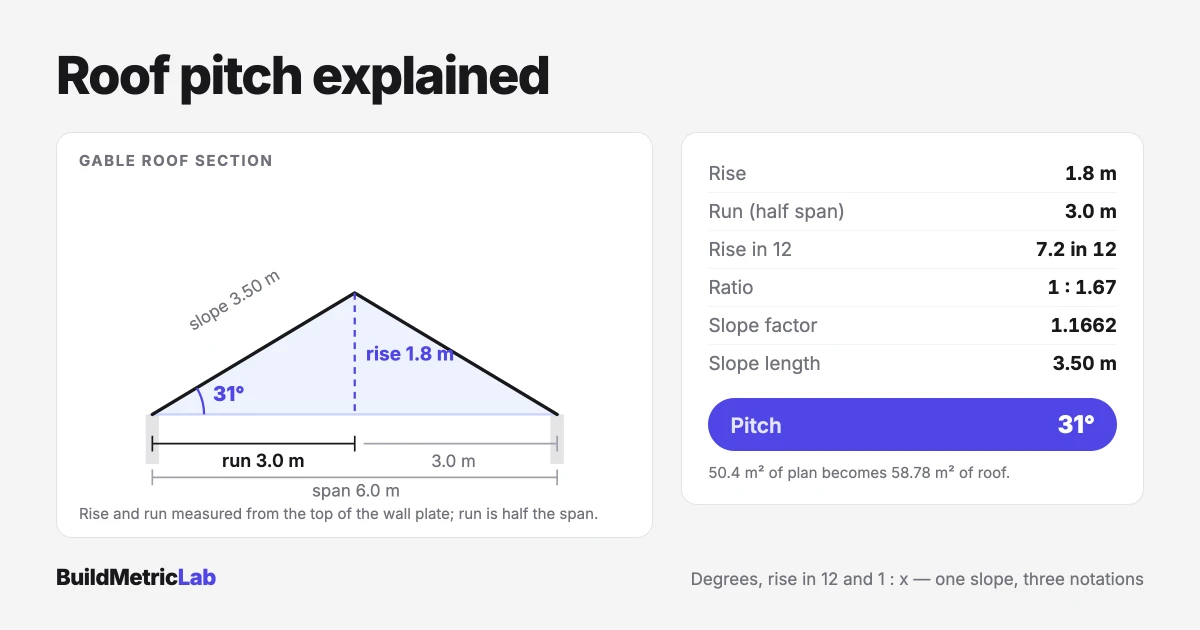
Roof Pitch Explained: Degrees, Ratios and How to Measure
Roof pitch links the plan footprint of a roof to the surface a roofer actually covers. This guide explains degrees, rise in 12 and 1:x ratios, where each notation is used, then works a gable roof through to a tile count.
Read guide → -
Masonry & Brickwork
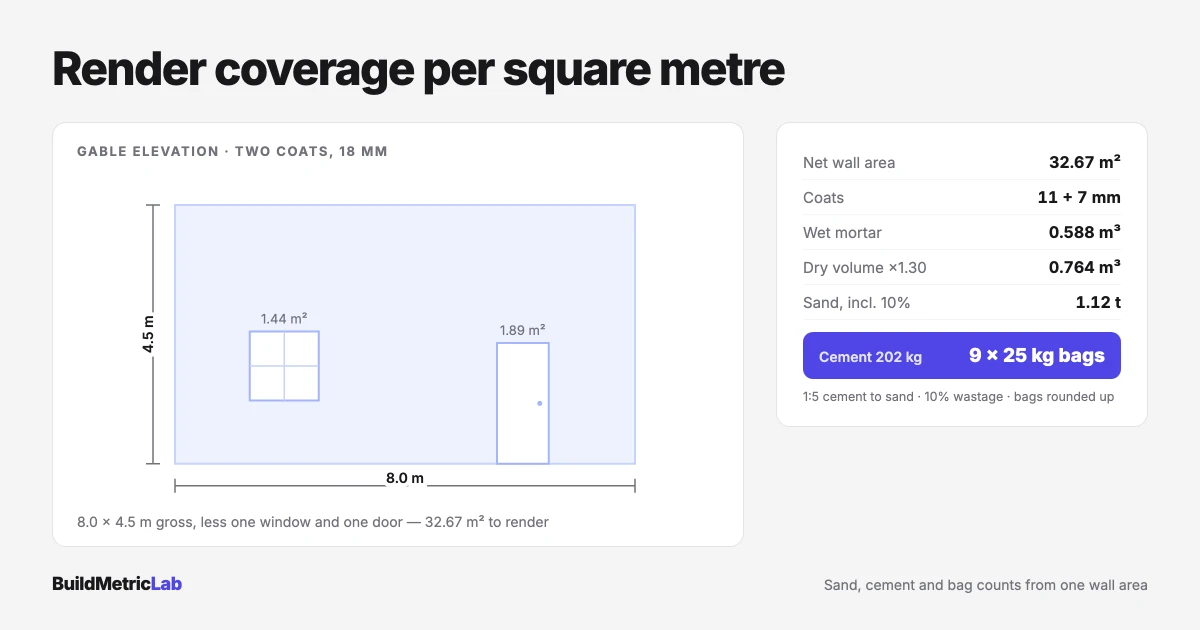
Render Coverage Per Square Metre: Sand, Cement and Bags
Render coverage per square metre turns wall area and coat thickness into cement bags and sand tonnages. This guide sets out the formula, a worked metric example with imperial equivalents, the bag sizes used in different markets, and the wastage allowance to add before ordering.
Read guide → -
Masonry & Brickwork
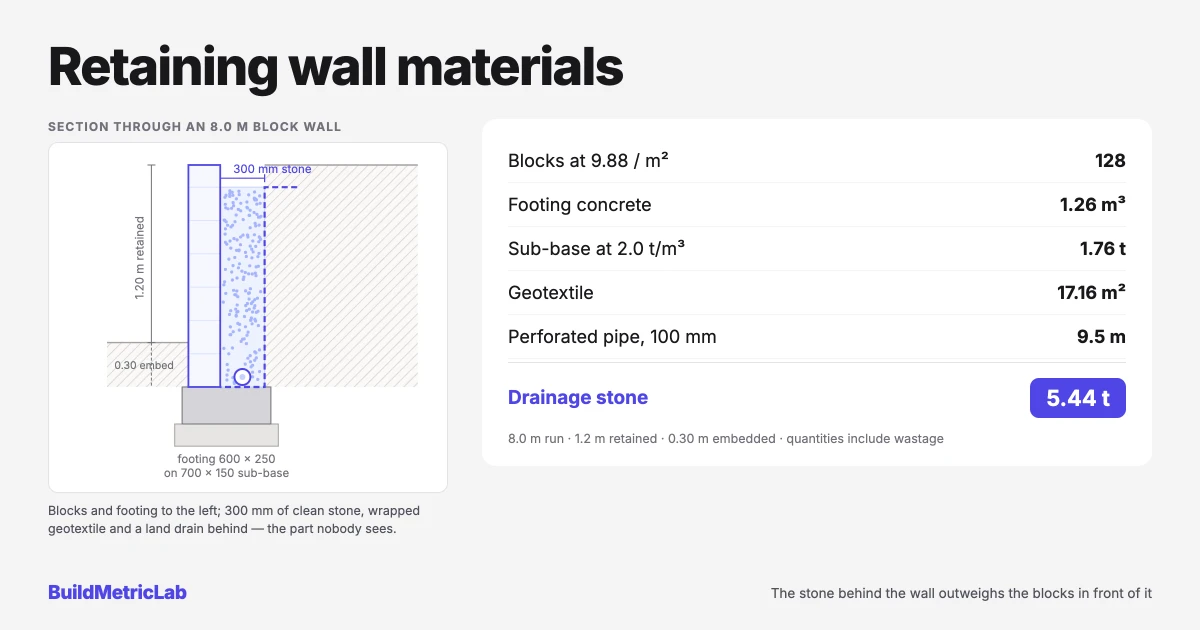
Retaining Wall Materials: Blocks, Backfill and Drainage
Retaining wall materials cover far more than the blocks you can see. A full quantity take-off for an 8 m gravity block wall — blocks, footing concrete, sub-base, drainage stone, geotextile and pipe — in metric with imperial equivalents.
Read guide →