Blog
Calculation guides, methodology notes, and worked examples. Page 2 of 3.
-
Masonry & Brickwork
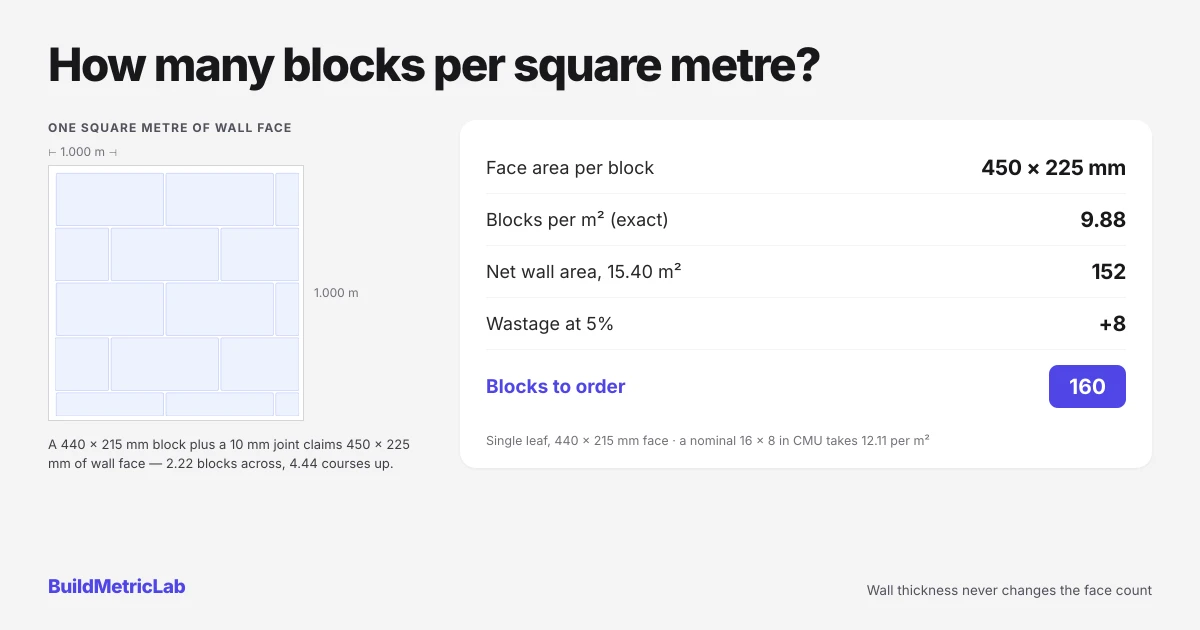
How Many Blocks Per Square Metre: Rates, Formula and Counts
A 440 by 215 mm block on a 10 mm joint gives 9.88 blocks per square metre; a nominal 16 by 8 in CMU gives 12.11. The formula, the rates for block formats used worldwide, and a worked garage wall example.
Read guide → -
Concrete & Foundations
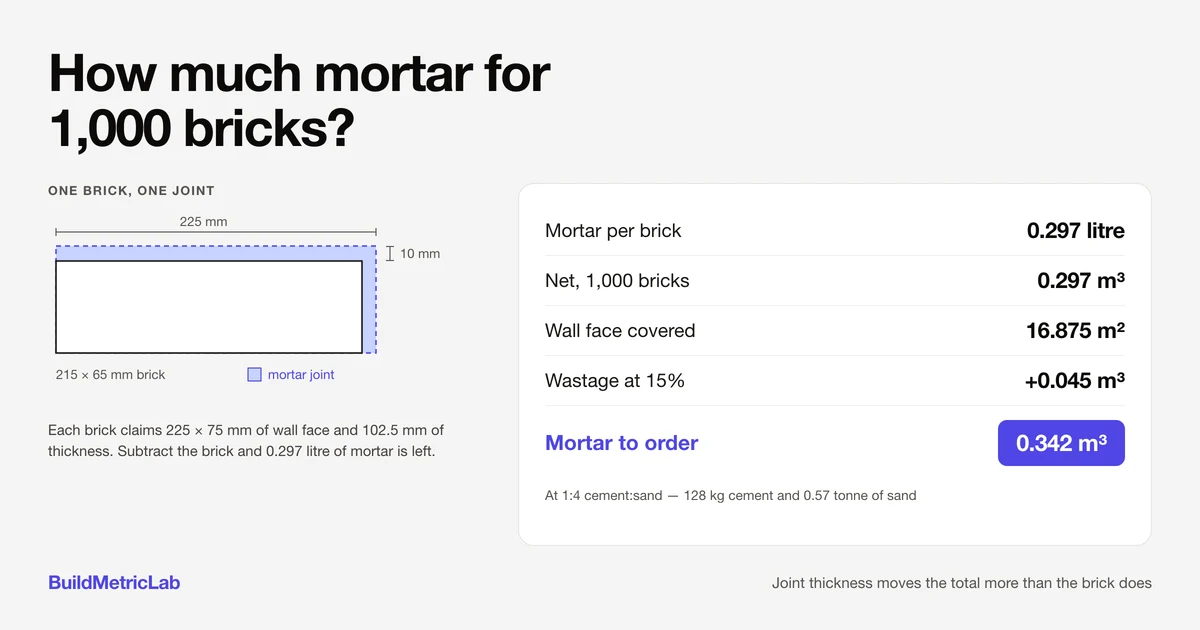
How Much Mortar for 1,000 Bricks or Blocks
A single leaf wall of 1000 standard metric bricks holds about 0.297 m³ (10.5 cu ft) of mortar. This guide gives the formula, a worked example in metric with imperial equivalents, the wastage allowance most estimates get wrong, and the cement and sand split for a 1:4 mix.
Read guide → -
Masonry & Brickwork
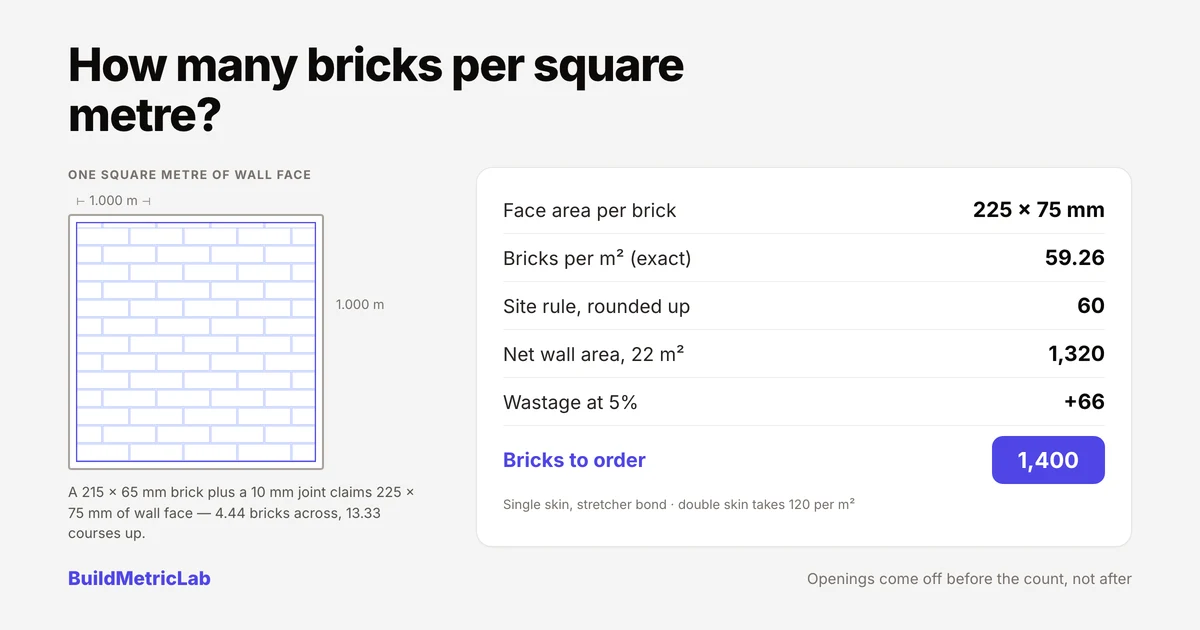
How Many Bricks Per Square Metre? The 60-Brick Rule
A standard metric brick plus a 10 mm joint covers 225 x 75 mm of wall face, which puts 59.26 bricks in every square metre. This guide explains where the 60 brick rule comes from, how coverage changes across international brick formats, and how to turn a net wall area into an order quantity.
Read guide → -
Concrete & Foundations
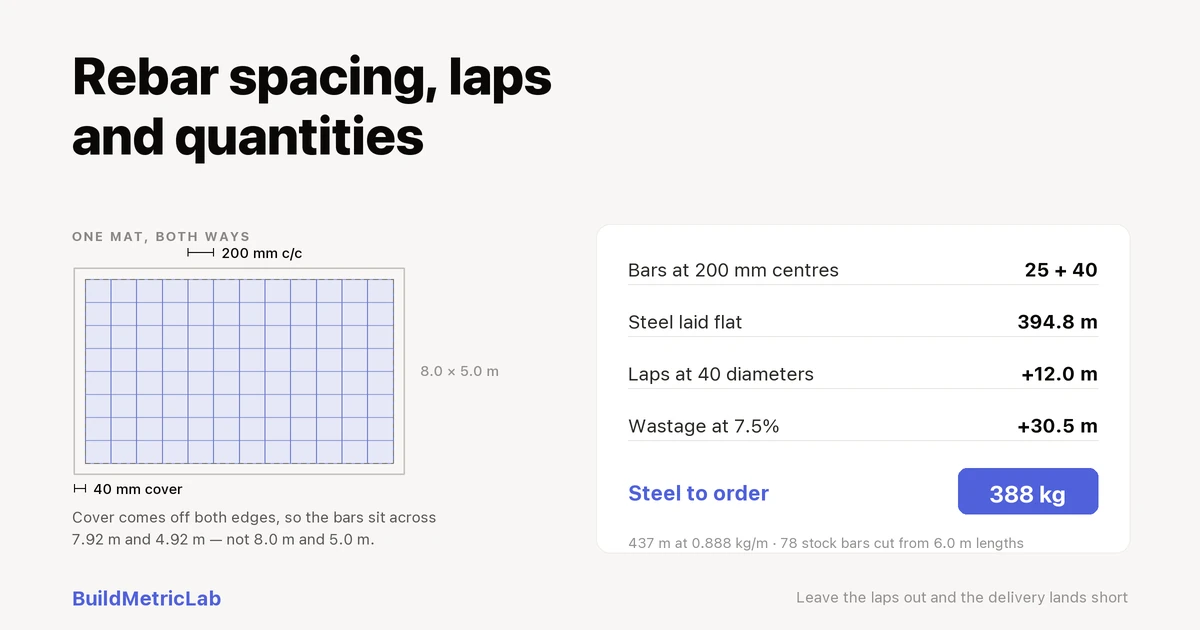
Rebar Spacing, Laps and Quantities: A Practical Guide
How rebar spacing turns into a bar count, a total length and a mass to order. Includes the formula, a full worked example in metric with imperial equivalents, and the errors that most often send an order back.
Read guide → -
Concrete & Foundations
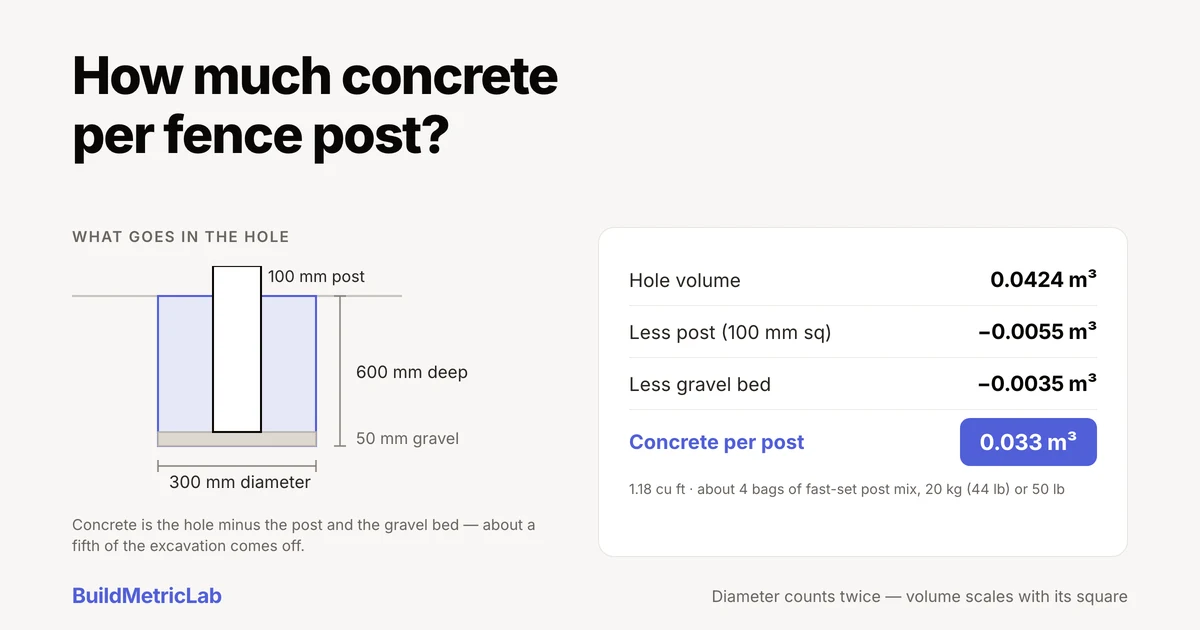
How Much Concrete Per Fence Post? Volume, Bags and Depth
How much concrete per fence post is a subtraction problem: hole volume minus the post and the gravel bed, plus a wastage allowance. This guide gives the formula, a worked example in metric with imperial equivalents, bag yields for both 20 kg and 50 lb markets, and the cases where the four-bag rule of thumb stops holding.
Read guide → -
Concrete & Foundations
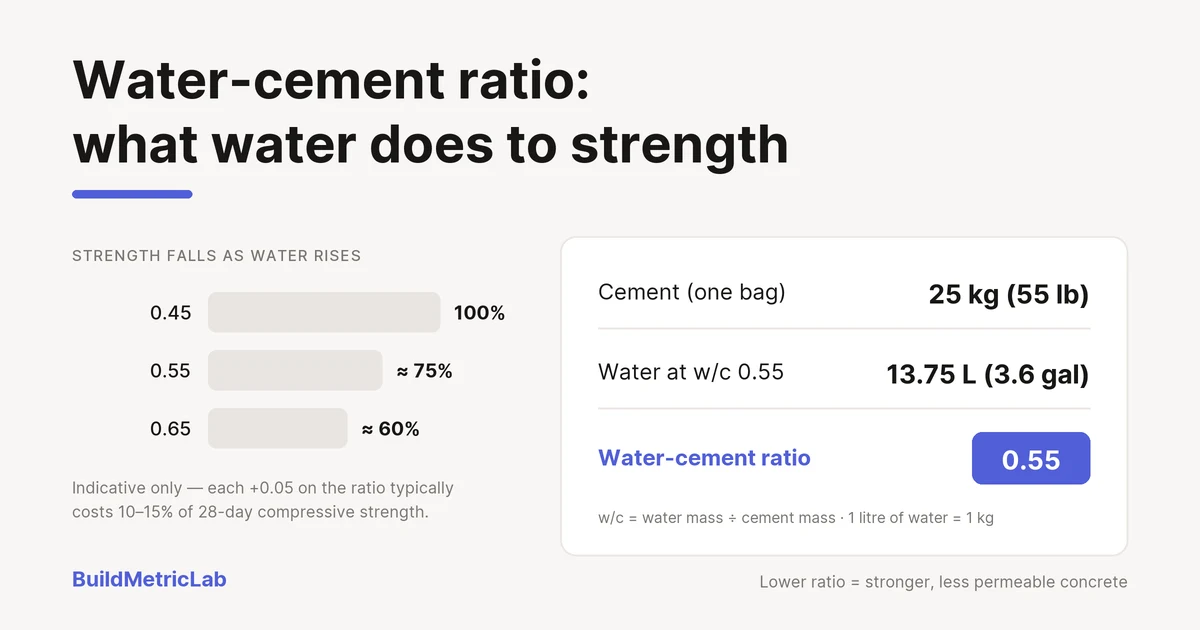
Water-Cement Ratio: Why It Decides Concrete Strength
The water cement ratio is the mass of mixing water divided by the mass of cement, and it governs concrete strength and durability more than any other single figure. This guide covers the formula, a metric worked example with imperial equivalents, the water figure for every common bag size, and the site habits that push the number too high.
Read guide → -
Concrete & Foundations
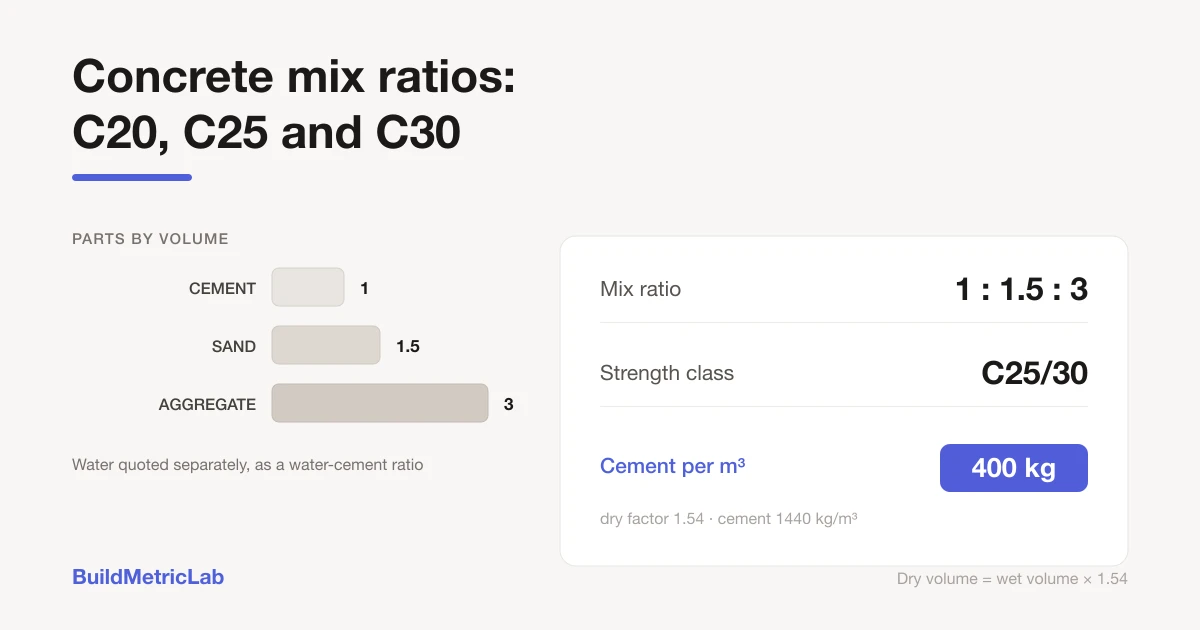
Concrete Mix Ratios Explained: C20, C25 and C30
A concrete mix ratio sets the proportions of cement, sand and coarse aggregate that decide strength and durability. This guide explains C20, C25 and C30, how they map to ACI and IS grades, and works a full slab example in metric with imperial equivalents.
Read guide → -
Concrete & Foundations
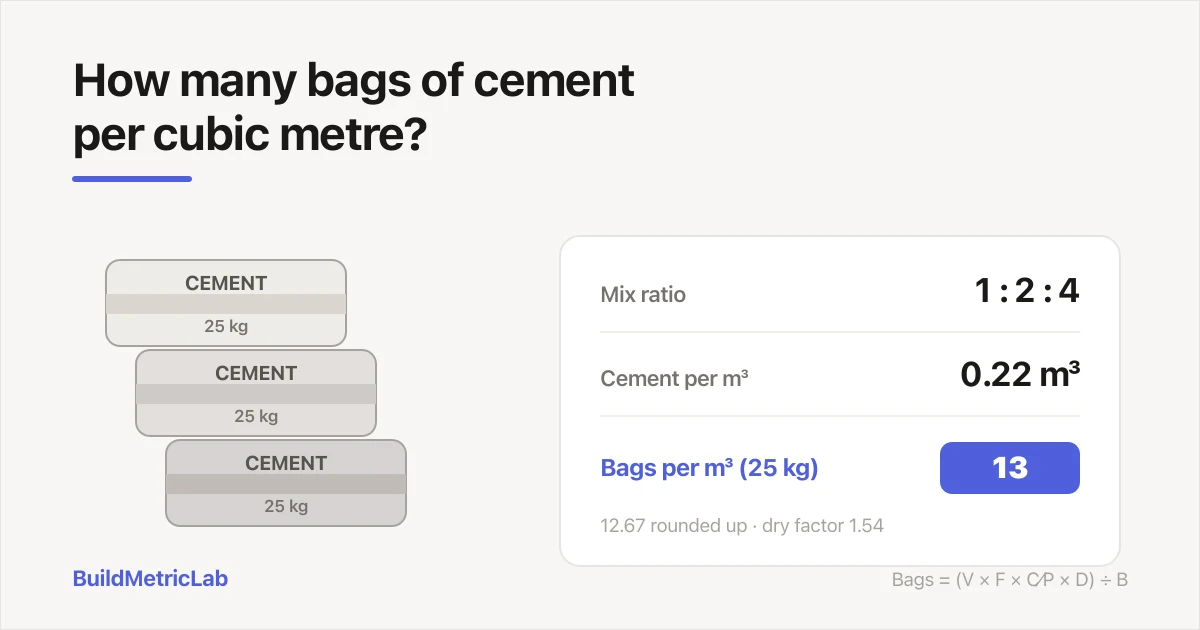
How Many Bags of Cement Per Cubic Metre of Concrete
The bag count for a pour follows from three numbers: the mix ratio, the bag mass and a dry volume factor most quick estimates skip. This guide works the formula through on a real garage base, gives the figures for every common bag size worldwide, and explains why a North American sack count looks nothing like a metric one.
Read guide → -
Concrete & Foundations
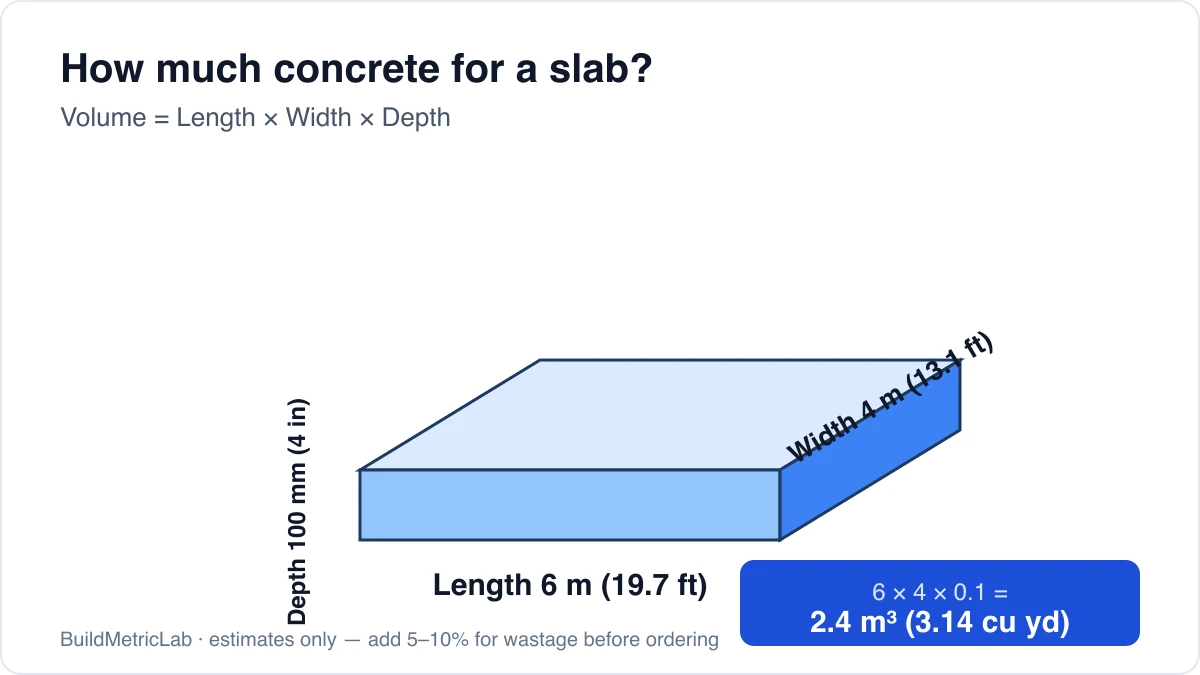
How Much Concrete Do I Need? Slabs, Footings and Volume
Work out how much concrete a slab, footing or pad needs, with a plain worked example, the volume formula and a free calculator. Metric throughout, with imperial equivalents.
Read guide → -
Drainage & Earthworks
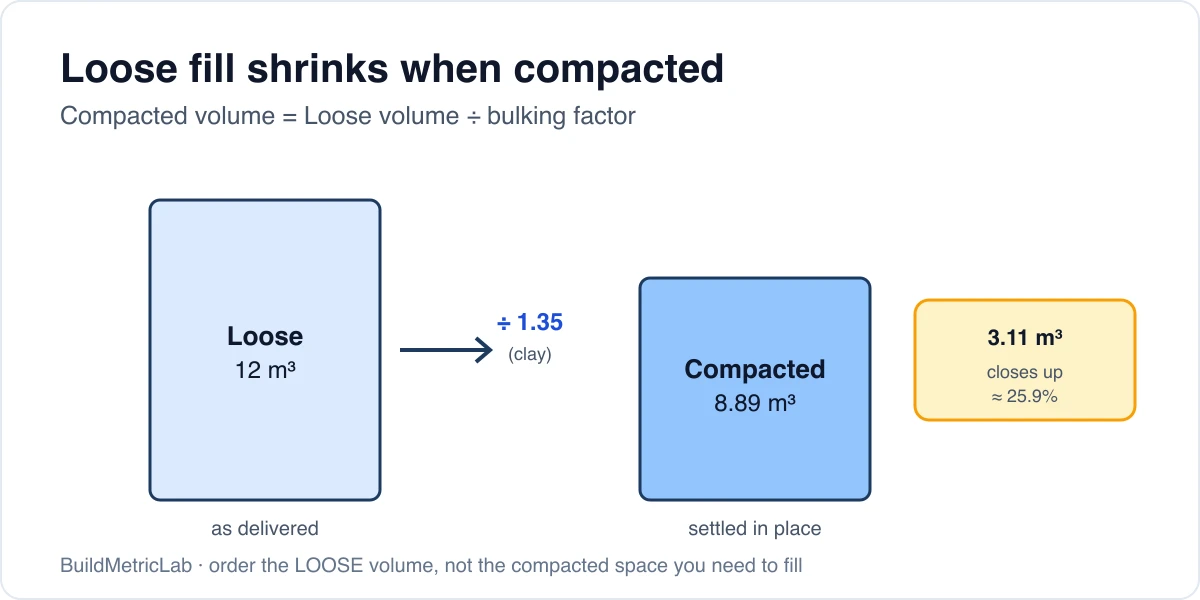
How to calculate compaction factor for fill
Loose fill shrinks when compacted, and that gap decides whether your delivery fills the space. Here's how compaction factor works, with a worked example.
Read guide →