Planning & Budgeting
Material Cost Calculator
Material cost from quantity, wastage, pack size, unit price, delivery and the tax you enter
Updated October 9, 2026 · Live
What this tool does
Prices one material line the way a merchant invoices it: the quantity plus a wastage allowance, rounded up to whole packs, times the unit price, plus delivery, plus whatever sales tax, VAT or GST you enter. No tax rate is built in. Run it once per material and add the lines together.
Quantity plus wastage, rounded up to whole packs, times the unit price, plus delivery, plus the tax rate you enter.

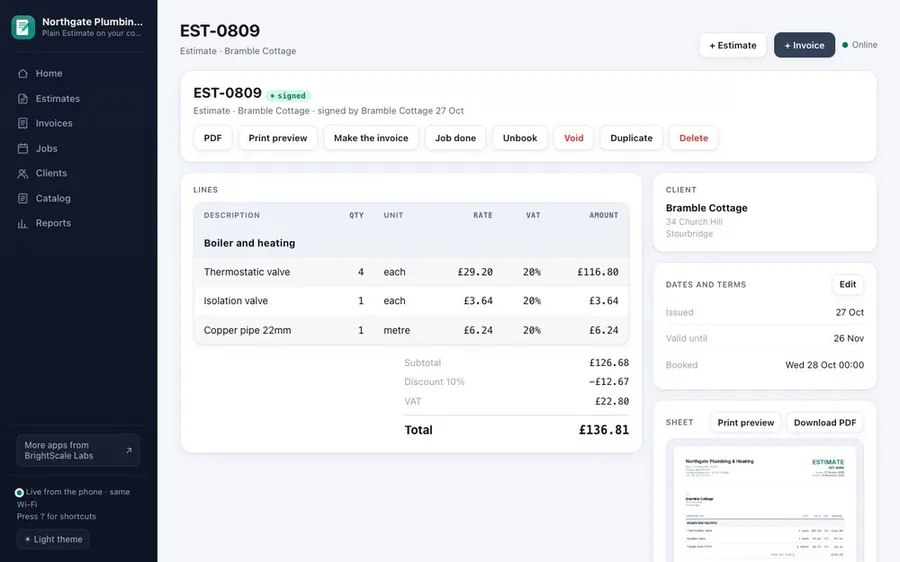
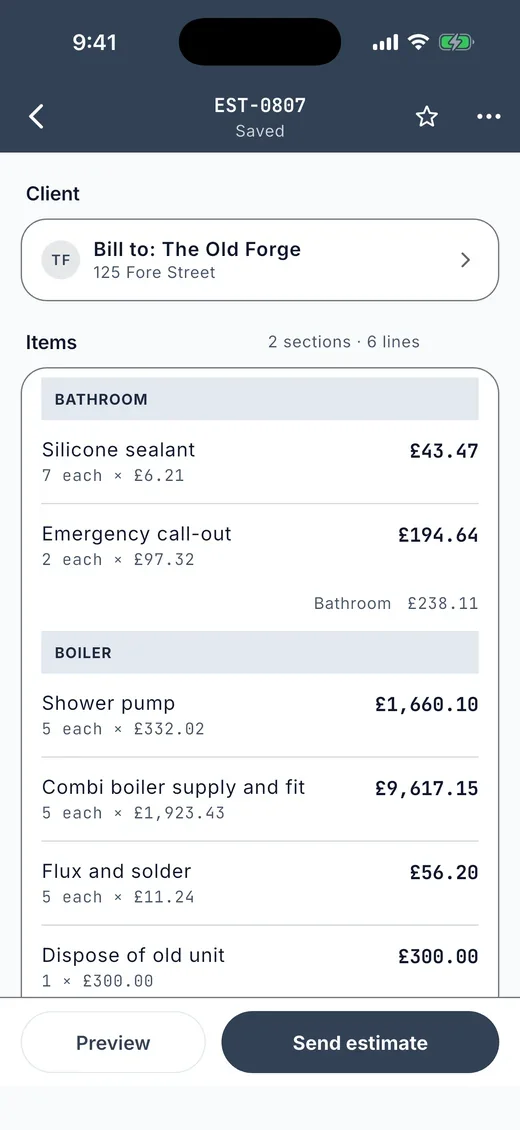
 Scan to get

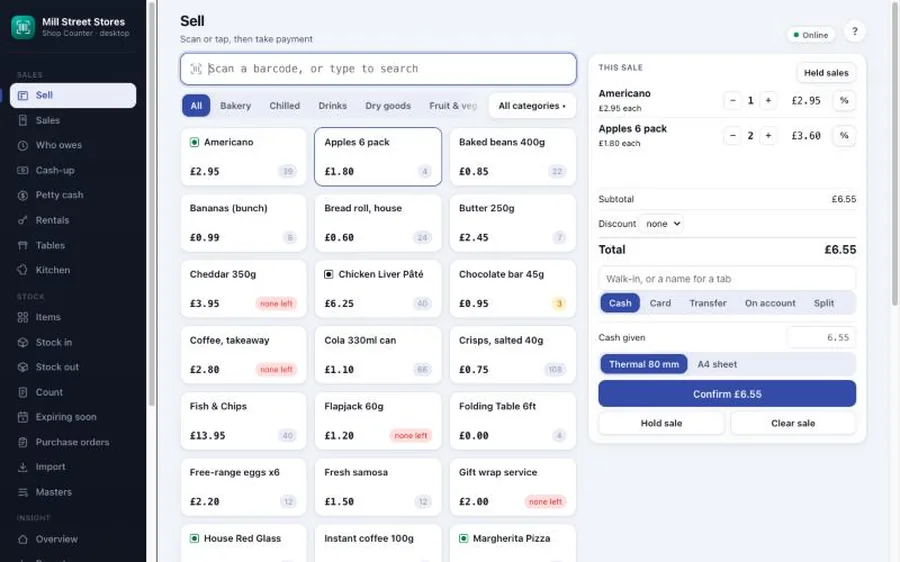
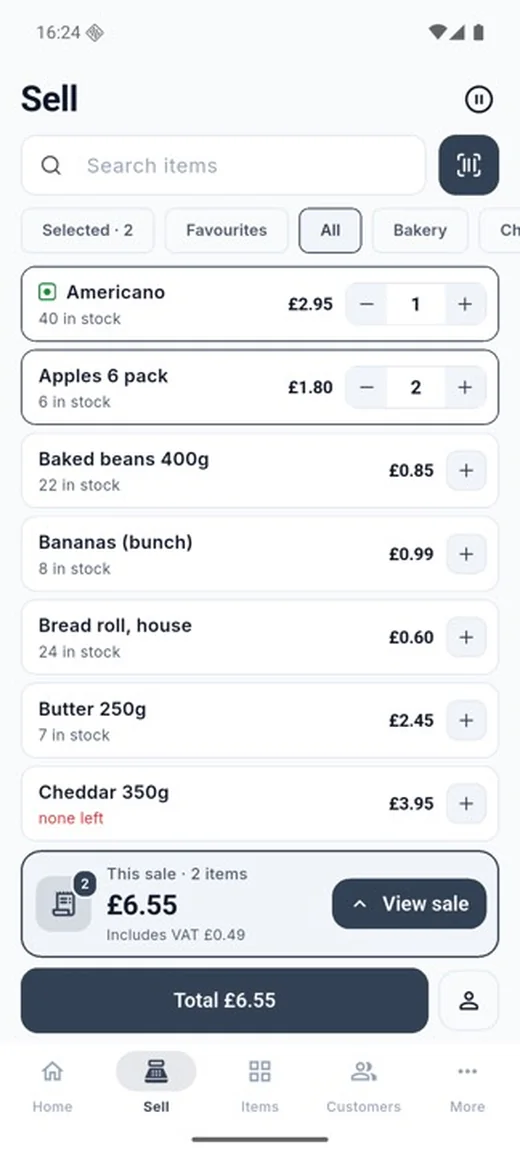
 Scan to get

 Scan to get
People also use
Formula Used
Formula Used
How the material cost calculator works
Every material line on an estimate is the same five-step sum, and this calculator does it once so you can do it fifty times. Start with the quantity the job needs, from a take-off or one of the quantity calculators on this site. Add the wastage allowance, because what you cut off, break and lose is bought at the same price as what ends up in the wall. Round up to whole packs, because the merchant sells boxes, bags, lengths and pallets, not 132.48 of anything. Multiply by the unit price, add the delivery charge, and put the consumption tax on top if your price list shows prices without it. The result is the figure that should match the bottom of the supplier's quote, and the rows above it show where any difference comes from.
Ten units at $18 with 10% wastage is 11 units and $198 of material. Add $45 delivery and the subtotal is $243; with no tax entered that is the total. Enter 8.25% and it becomes $263.05, because the tax row applies to delivery as well as goods. Change any input and the whole column moves.
Wastage: what the allowance is for
The 10% default is the figure most trades reach for on a material that gets cut: tiles, boards, timber, plasterboard. It is not a law. Poured concrete needs less, and the National Ready Mixed Concrete Association puts the over-order at 4% to 10% on top of the plan quantity, with the low end for a simple slab on a level base. Diagonal tile layouts, herringbone floors and rooms full of alcoves sit at 15% or more because every cut leaves an offcut that fits nowhere else. Brick and block are usually ordered at 5% to 10% for breakages and cuts at openings. A first-time DIY job earns a few points more than a trade crew would allow. Set it to 0 to see the bare take-off, and remember the allowance is bought at full price: on the £2,000 tile order below it is £180 of the bill, which is the cost of not having to re-order one box from a different batch three weeks later.
Packs, rounding and the price per unit
The unit price and the pack size have to describe the same thing. If tiles are priced per square metre and sold in boxes of 1.44 m², the quantity is in square metres, the unit price is per square metre and the pack size is 1.44. If they are priced per box, the quantity is in boxes and the pack size is 1. Either way the calculator rounds the quantity with wastage up to the next whole pack and prices what you actually buy, so the material row is 92 boxes times 1.44 m² times the rate, not 132 m² times the rate. For goods sold by measure to the merchant's own precision, bulk aggregate by the tonne or sheet by the whole sheet, enter the smallest quantity they will sell: 0.01 for a tonne to the nearest 10 kg, 1 for a sheet. A pack size of 1 with a quantity of 7 and 10% wastage buys 8, because nobody sells 0.7 of a bag.
Delivery and tax: where the rules differ
The calculator taxes the delivery charge at the same rate as the goods, which is the usual treatment but not a universal one, so it pays to know your own rule. In the UK, HMRC's VAT Notice 700/24 is clear: where the contract is for delivered goods, "an additional charge for delivery will follow the liability of the goods", and it makes no difference whether delivery is itemised separately on the invoice. A builders' merchant delivering its own goods charges VAT on the delivery at the goods' rate. Australia and Canada treat delivered goods the same way. The Australian Taxation Office's ruling GSTR 2001/8 treats delivery that is incidental to a sale of goods as part of one composite supply taxed as the goods are, and the Canada Revenue Agency's info sheet GI-202 says that where goods are supplied on a delivered basis the delivery forms part of that supply, with the charge apportioned between goods taxed at different rates. The United States is state by state. California's Publication 100 exempts a delivery charge only when the goods go by common carrier, the charge is separately stated on the invoice and it is no more than the actual cost; delivery in the seller's own truck, or a price quoted "delivered", is taxable. Most lumber yards deliver in their own trucks. If your state exempts the delivery line, take it out of the delivery input and add it to the total afterwards.
No tax rate is built in. The default is 0 because rates change, vary by state, province and product, and are the reader's to look up: 20% standard-rate VAT in the UK, 10% GST in Australia, 5% GST plus the provincial part in Canada, and anything from nothing to over 10% across US cities. Trade price lists in the UK and Australia usually show prices before tax and consumer ones after; if the price you typed already includes it, leave the rate at 0.
Two worked examples
A 120 m² floor in porcelain at £15 per m², sold in 1.44 m² boxes, with 10% for a diagonal lay: 132 m² with wastage, which is 91.7 boxes, so 92 boxes and 132.48 m² at £15 is £1,987.20. Delivery on a pallet is £35, giving £2,022.20, and VAT at 20% on the lot is £404.44, for a total of £2,426.64. The 0.48 m² over the allowance is the rounding, a third of a box, and it goes in the garage for repairs.
A 350 ft² bathroom and hall in ceramic at $3.50 per ft², sold in 10.76 ft² boxes (a square metre each), 10% wastage, $60 delivery and 6% sales tax: 385 ft² with wastage is 35.8 boxes, so 36 boxes and 387.36 ft² at $3.50 is $1,355.76; with delivery, $1,415.76; with tax on both, $84.95, and a total of $1,500.71. The same layout in a herringbone at 15% would need 402.5 ft² and 38 boxes, two more boxes and about $80 more.
Getting the quantity right
The calculator trusts the quantity you give it, so that is where to spend the care. Measure the area or run from the drawing or the room, not from memory, and take it off in the unit the material is sold in. The quantity calculators on this site do that conversion for most materials: the tile calculator turns a floor into boxes, the concrete and brick tools turn a slab or wall into cubic metres and thousands. Then check the unit price is for the unit you measured. The commonest estimating mistake on a material line is not the wastage or the tax; it is a price per pack applied to a quantity in square metres, or a price per metre applied to a count of lengths.
What the calculator leaves out
Labour, plant, skips and the fixings, adhesives and grout that go with the material are separate lines; the labour cost calculator handles the first and a second run of this page handles the rest. It does not know about trade discounts, minimum order charges or the price break at a full pallet, so use the price you will actually pay. It cannot tell you whether the delivery charge is taxable where you are; that paragraph above is the most it can do. And it is one line, not a budget: the project contingency calculator adds the allowance for the things the take-off missed, and the build budget calculator adds the lines together.
Using this with other BuildMetricLab tools
Run a quantity tool first, bring its figure here with the pack size from the merchant's listing, then save the line to My Project or send it to PlainEstimate from the result card and do the next material. The contractor markup calculator turns a column of material and labour lines into a price. All BuildMetricLab tools run in your browser with no sign-up, and the formula is on the page so the maths can be checked.
Sources & methodology
Quantity with wastage = quantity × (1 + wastage %). Units to buy = that figure rounded up to the next whole pack (pack size × ceiling of quantity ÷ pack size). Material = units to buy × unit price; subtotal = material + delivery; tax = subtotal × rate entered (0 by default, nothing baked in); total = subtotal + tax. Tax is applied to the delivery charge as well as the goods, which is the treatment for delivered goods under UK VAT Notice 700/24, ATO ruling GSTR 2001/8 and CRA info sheet GI-202; some US states exempt a separately stated common-carrier delivery charge (California CDTFA Publication 100). Wastage guidance: 10% default for cut materials; NRMCA CIP 31 gives 4% to 10% for ready-mixed concrete.
- HMRC, Postage, delivery and direct marketing (VAT Notice 700/24): an additional charge for delivery follows the liability of the goods, whether or not it is itemised separately
- California Department of Tax and Fee Administration, Publication 100, Shipping and Delivery Charges: when a delivery charge is and is not taxable
- Canada Revenue Agency, GST/HST Info Sheet GI-202, Delivery Services Involving Platforms: delivery of goods supplied on a delivered basis forms part of the supply of the goods
- NRMCA, CIP 31: Ordering Ready Mixed Concrete (order 4% to 10% more than the plan quantity)
Frequently asked questions
Are material cost calculator results accurate enough to order materials?
The arithmetic is exact; the result is only as good as the quantity, the pack size and the price you enter. Take the quantity off a drawing or the room in the unit the material is sold in, use the pack size from the merchant's listing and the price from a current quote, and the units-to-buy row is what to order. Treat the total as a check against the supplier's quote, not a substitute for it.
What wastage percentage should I use?
10% by default, which suits cut materials such as tiles, boards and timber. Poured concrete needs less: NRMCA suggests 4% to 10% over the plan quantity. Diagonal or herringbone layouts and rooms with many alcoves need 15% or more, brick and block are usually ordered at 5% to 10%, and a first DIY job earns a few points extra. Set it to 0 to see the bare take-off.
Does this replace professional advice?
No. It prices one material line. It does not check that the quantity is right for the job, that the material suits the use, or that the work meets any code. For anything that affects structure, gas, electrics, plumbing or drainage to a public sewer, have a suitably qualified professional specify the material and the quantity.
Can I change the unit prices?
Yes. The unit price, delivery charge and tax rate are all yours to set, and no tax rate is built in. Enter the price for the same unit the quantity is measured in, the delivery from the quote, and the tax rate that applies to you if the price excludes it: 20% VAT in the UK, 10% GST in Australia, GST or HST in Canada, your state and local rate in the US. Leave the tax at 0 if the price already includes it.
Spotted something off?
Calculations or display — let us know.
Related tools
Calculators from other categories that planners often reach for next.